Guide
Reading levels by grade — what level should my child be?
6 min read
A parent-friendly chart that lines up the four reading-level systems — Lexile, Guided Reading (Fountas & Pinnell), DRA, and Accelerated Reader (ATOS) — against US grade levels, K through 8, with the honest caveats that matter.
The most-asked reading question parents have is the simplest: what level should my child be reading at? The honest answer is “a range, not a number” — and the range depends on which of four systems your school uses. Here they all are, lined up against US grades, in one place.
Reading levels by grade (typical mid-year ranges)
| Grade | Lexile | Guided Reading | DRA | AR (ATOS) |
|---|---|---|---|---|
| Kindergarten | BR–230L | A–D | 1–4 | 0.0–1.0 |
| Grade 1 | 190L–530L | D–J | 4–16 | 1.0–1.9 |
| Grade 2 | 420L–650L | J–M | 16–24 | 2.0–2.9 |
| Grade 3 | 520L–820L | M–P | 24–38 | 3.0–3.9 |
| Grade 4 | 740L–940L | P–S | 38–40 | 4.0–4.9 |
| Grade 5 | 830L–1010L | S–V | 40–50 | 5.0–5.9 |
| Grade 6 | 925L–1070L | V–Y | 50–60 | 6.0–6.9 |
| Grade 7 | 970L–1120L | Y–Z | 60–70 | 7.0–7.9 |
| Grade 8 | 1010L–1185L | Z+ | 70–80 | 8.0–8.9 |
Sources: Lexile ranges from MetaMetrics; Guided Reading letters from Fountas & Pinnell; DRA and ATOS from standard published correlations. Charts vary slightly between districts — treat every cell as “about here,” not a boundary.
Why these are ranges, not targets
Three things to keep in mind before you read a row as a verdict:
1. Readers spread by a grade or two. Within any single classroom, reading levels routinely span three or four grades. Being below the row for your grade is common and not, by itself, a problem.
2. The systems don’t convert exactly. A book is not “Lexile 600 = DRA 24” in any precise way. Each formula weighs different things, so the columns line up only roughly. If your school mixes systems, the Lexile vs. DRA vs. Guided Reading guide explains how each one is measured.
3. Topic and motivation move the number. The same child reads “above level” on a subject they love and “below level” on one they don’t. Choice is the most reliable engine of progress.
Putting it to use
Once you know your child’s level in whichever system the school uses, the practical step is finding books inside that band that they actually want to read. Browse by grade to see what real schools assign, look up any Lexile measure, or read how the systems compare in the Accelerated Reader, DRA, and reading level vs. age guides.
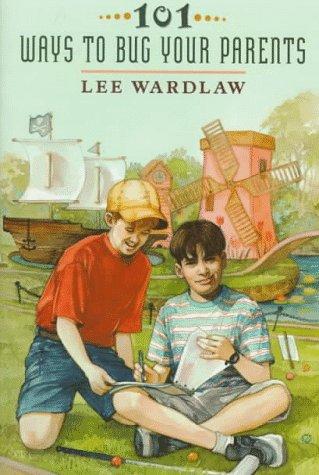
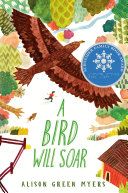
Example books at Grade 1
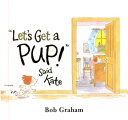
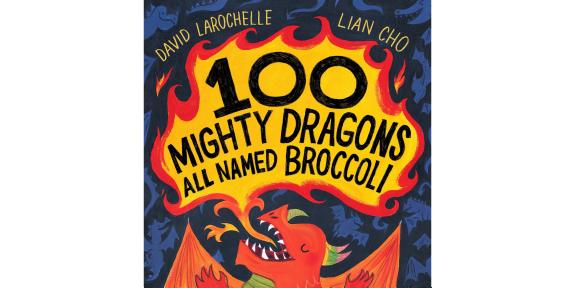
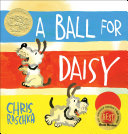
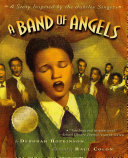

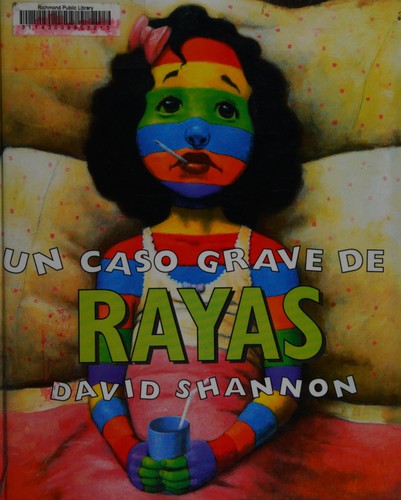
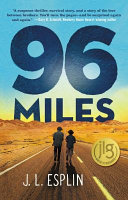
Example books at Grade 4


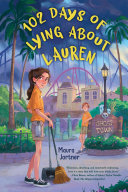
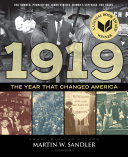
Example books at Grade 7

Common questions
- What reading level should my child be in 3rd grade?
- A typical 3rd grader reads in roughly the 520L–820L Lexile band, Guided Reading levels M–P, DRA 24–38, or ATOS 3.0–3.9. But these are mid-year averages, not pass/fail lines — strong 3rd graders read well above them and developing readers below, and that is normal. Use the range to pick books, not to rank your child.
- Is one reading-level system more accurate than the others?
- No single system is “right.” Lexile and ATOS are computer-scored from sentence and word patterns; Guided Reading (Fountas & Pinnell) and DRA are teacher-assessed from how a child actually reads aloud. Schools usually report whichever one they use. They overlap but do not convert exactly, which is why the same book can carry several different numbers.
- My child is reading below grade level — should I worry?
- One number on one day is weak evidence. Reading levels move in spurts, dip over long breaks, and vary by topic and motivation. What matters more is steady reading of books a child enjoys. If a gap persists across a school year despite regular reading, that is the point to ask the teacher about targeted support — not a single below-grade score.
- How do these grade ranges relate to age?
- Loosely. US grade levels track age within about a year (a typical 3rd grader is 8–9), but reading level is not the same as age — see our guide on reading level vs. age level. Choose by what a child can read and wants to read, not by birthday.
Sources
Related guides
- Building your child’s vocabulary — why it matters and how
Vocabulary is one of the strongest drivers of reading comprehension — you can’t fully understand a text full of words you don’t know. Here is how to grow your child’s word knowledge at home.
- Phonemic awareness explained (and how to build it)
Phonemic awareness is hearing and playing with the individual sounds in spoken words — no letters involved. It’s a foundation for phonics and one of the strongest early predictors of reading success.
- How to teach a child to read at home
Learning to read is built on five skills, in a rough order. Here is the calm, evidence-based at-home sequence — from reading aloud and playing with sounds to phonics, fluency, and comprehension — without the pressure.
- Phonics explained — and the phonics vs. whole-language debate
Phonics teaches children to read by the link between letters and sounds. Here is what it is, how systematic phonics differs from the old whole-language approach, and why it isn’t the whole story.
- Reading fluency — what it is and how to help your child build it
Fluency is the bridge between sounding words out and understanding them — reading smoothly, at a comfortable pace, with natural expression. Here is how to spot it and the methods that actually build it.