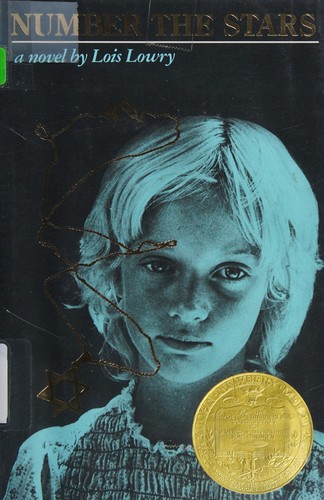
Number the Stars
by Lois Lowry
Audible trial: new members only. As an Amazon Associate, ReadingList earns from qualifying purchases and membership trials at no extra cost to you.
Among the most widely assigned — 11 curriculum lists · 9 states
#36 most-assigned book in America — on school reading lists in 9 states (2026-07-13 study of 13,258 assignments).
Grade placement varies by school — the median assigned book spans 4 grade levels (83% span three or more, across 13,258 source-cited assignments).
Number the Stars by Lois Lowry is assigned in US schools at grades 4–7, with a Lexile measure of 670L. It appears across 11 curriculum references and 9 states, sourced from state DOE pages and AP/IB/Common Core syllabi. Every citation below links to the primary source.
This page shows where Number the Stars is assigned in US schools — curricula, states, grades, and the primary-source citations behind each placement. Not a summary or study guide.
- Lexile
- 670L
- Grade range
- Grades 4–7
- Difficulty for grade
- Below the grade 4–5 band (740–1010L)
- Age range
- Ages 9–12
- Pages
- 137
- Reading time
- about 2h 30m (est.)
- First published
- 1989
- Genre
- Historical Fiction (Middle Grade)
- ISBN-13
- 9780547577098
Reading difficulty: At 670L, Number the Stars reads below the typical 740–1010L text-complexity range for 4th grade (Common Core Appendix A). It is an accessible read for the grade — often assigned for its themes and discussion value rather than for reading challenge.
Reading below grade level? Kids who struggle with the print version often finish the assigned book by listening — try the audiobook free with an Audible trial. Affiliate link · trial for new members.
New to these terms? What is a Lexile level? · Reading levels by grade · What is the Newbery Medal?
More formats & details
Other formats on Amazon: Kindle · Audiobook
As an Amazon Associate, ReadingList earns from qualifying purchases and membership trials at no extra cost to you. Pricing, Prime, and trial terms shown on Amazon.
About this book
Ten-year-old Annemarie Johansen helps her family smuggle her Jewish friend out of Nazi-occupied Denmark. Lowry's Newbery Medal novel is a near-universal 4th-6th grade Holocaust-introduction text and appears on Common Core exemplar lists for grades 4-5.
Similar grade-level books
 To Kill a MockingbirdHarper Lee · 870L
 The GiverLois Lowry · 760L
 The OutsidersS.E. Hinton · 750L
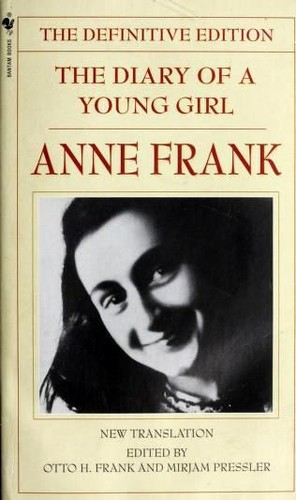 The Diary of a Young GirlAnne Frank · 1080L
See all books like Number the Stars→ — matched on theme + reading level.
Why widely assigned
This Historical Fiction (Middle Grade) title, reads at middle-grade prose complexity, typically at grades 4–7. Written in the 1980s; pairs with curriculum units on courage and friendship; cited across 11 curriculum frameworks.
Themes
courage · friendship · Holocaust · resistance · family
Content notes
war themes · peril · Holocaust references
Common Sense Media recommends age 9+.
Where this book is assigned
Charlie May Simon Children's Book Award
- recommended·4th grade · Arkansassource: Arkansas State Library / Arkansas Literacy Association — Charlie May Simon Children's Book Award (student-choice, grades 4-6; annual since 1971)
- recommended·5th grade · Arkansassource: Arkansas State Library / Arkansas Literacy Association — Charlie May Simon Children's Book Award (student-choice, grades 4-6; annual since 1971)
- recommended·6th grade · Arkansassource: Arkansas State Library / Arkansas Literacy Association — Charlie May Simon Children's Book Award (student-choice, grades 4-6; annual since 1971)
- recommended·7th grade · Arkansassource: Arkansas State Library / Arkansas Literacy Association — Charlie May Simon Children's Book Award (student-choice, grades 4-6; annual since 1971)
Charlotte Award
- recommended·4th grade · New Yorksource: New York State Reading Association — Charlotte Award winner (official 'History of NYSRA Charlotte Winners' 1990-2025 PDF, nysreading.org/Charlotte-Awards, fetched 2026-07-02)
- recommended·5th grade · New Yorksource: New York State Reading Association — Charlotte Award winner (official 'History of NYSRA Charlotte Winners' 1990-2025 PDF, nysreading.org/Charlotte-Awards, fetched 2026-07-02)
- recommended·6th grade · New Yorksource: New York State Reading Association — Charlotte Award winner (official 'History of NYSRA Charlotte Winners' 1990-2025 PDF, nysreading.org/Charlotte-Awards, fetched 2026-07-02)
- recommended·7th grade · New Yorksource: New York State Reading Association — Charlotte Award winner (official 'History of NYSRA Charlotte Winners' 1990-2025 PDF, nysreading.org/Charlotte-Awards, fetched 2026-07-02)
Common Core State Standards (ELA)
Dorothy Canfield Fisher / Vermont Golden Dome Book Award
- recommended·4th grade · Vermontsource: Dorothy Canfield Fisher / Vermont Golden Dome Children's Book Award — official winners list (Vermont grades 4-8, annual since 1957)
- recommended·5th grade · Vermontsource: Dorothy Canfield Fisher / Vermont Golden Dome Children's Book Award — official winners list (Vermont grades 4-8, annual since 1957)
- recommended·6th grade · Vermontsource: Dorothy Canfield Fisher / Vermont Golden Dome Children's Book Award — official winners list (Vermont grades 4-8, annual since 1957)
- recommended·7th grade · Vermontsource: Dorothy Canfield Fisher / Vermont Golden Dome Children's Book Award — official winners list (Vermont grades 4-8, annual since 1957)
Great Stone Face Book Award
- recommended·4th grade · New Hampshiresource: Children's Librarians of New Hampshire / NH Library Association — Great Stone Face Book Award (student-choice, grades 4-6; 20 nominees/year, annual since 1980). Winner + nominee rolls via the LibraryThing award/757 mirror of the official sponsor records.
- recommended·5th grade · New Hampshiresource: Children's Librarians of New Hampshire / NH Library Association — Great Stone Face Book Award (student-choice, grades 4-6; 20 nominees/year, annual since 1980). Winner + nominee rolls via the LibraryThing award/757 mirror of the official sponsor records.
- recommended·6th grade · New Hampshiresource: Children's Librarians of New Hampshire / NH Library Association — Great Stone Face Book Award (student-choice, grades 4-6; 20 nominees/year, annual since 1980). Winner + nominee rolls via the LibraryThing award/757 mirror of the official sponsor records.
- recommended·7th grade · New Hampshiresource: Children's Librarians of New Hampshire / NH Library Association — Great Stone Face Book Award (student-choice, grades 4-6; 20 nominees/year, annual since 1980). Winner + nominee rolls via the LibraryThing award/757 mirror of the official sponsor records.
Maine Student Book Award
- recommended·4th grade · Mainesource: Maine Student Book Award — Maine's statewide children's-choice reading program (grades 4-8): students read the annual nominees and vote for their favorite. Winner list verified from the award's published record.
- recommended·5th grade · Mainesource: Maine Student Book Award — Maine's statewide children's-choice reading program (grades 4-8): students read the annual nominees and vote for their favorite. Winner list verified from the award's published record.
- recommended·6th grade · Mainesource: Maine Student Book Award — Maine's statewide children's-choice reading program (grades 4-8): students read the annual nominees and vote for their favorite. Winner list verified from the award's published record.
- recommended·7th grade · Mainesource: Maine Student Book Award — Maine's statewide children's-choice reading program (grades 4-8): students read the annual nominees and vote for their favorite. Winner list verified from the award's published record.
Show 5 more awards & assignmentsShow fewer
Newbery Medal
- recommended·3rd gradesource: Newbery Medal (American Library Association), via Wikipedia — 1990 Newbery Medal winner
- recommended·4th gradesource: Newbery Medal (American Library Association), via Wikipedia — 1990 Newbery Medal winner
- recommended·5th gradesource: Newbery Medal (American Library Association), via Wikipedia — 1990 Newbery Medal winner
- recommended·6th gradesource: Newbery Medal (American Library Association), via Wikipedia — 1990 Newbery Medal winner
- recommended·7th gradesource: Newbery Medal (American Library Association), via Wikipedia — 1990 Newbery Medal winner
Rebecca Caudill Young Readers' Book Award
- recommended·4th grade · Illinoissource: Rebecca Caudill Young Readers' Book Award — official winners list (Illinois grades 4-8, voted annually since 1988)
- recommended·5th grade · Illinoissource: Rebecca Caudill Young Readers' Book Award — official winners list (Illinois grades 4-8, voted annually since 1988)
- recommended·6th grade · Illinoissource: Rebecca Caudill Young Readers' Book Award — official winners list (Illinois grades 4-8, voted annually since 1988)
- recommended·7th grade · Illinoissource: Rebecca Caudill Young Readers' Book Award — official winners list (Illinois grades 4-8, voted annually since 1988)
Summer reading lists
Vermont Golden Dome Book Award
- recommended·4th grade · Vermontsource: Vermont Dept. of Libraries — Golden Dome Book Award (formerly the Dorothy Canfield Fisher Award, est. 1957): Vermont's statewide grades 4-8 children's-choice program (students read the nominees and vote). Winner list 1957-2020.
- recommended·5th grade · Vermontsource: Vermont Dept. of Libraries — Golden Dome Book Award (formerly the Dorothy Canfield Fisher Award, est. 1957): Vermont's statewide grades 4-8 children's-choice program (students read the nominees and vote). Winner list 1957-2020.
- recommended·6th grade · Vermontsource: Vermont Dept. of Libraries — Golden Dome Book Award (formerly the Dorothy Canfield Fisher Award, est. 1957): Vermont's statewide grades 4-8 children's-choice program (students read the nominees and vote). Winner list 1957-2020.
- recommended·7th grade · Vermontsource: Vermont Dept. of Libraries — Golden Dome Book Award (formerly the Dorothy Canfield Fisher Award, est. 1957): Vermont's statewide grades 4-8 children's-choice program (students read the nominees and vote). Winner list 1957-2020.
Wisconsin Golden Archer Award
- recommended·4th grade · Wisconsinsource: Wisconsin Educational Media and Technology Association — Golden Archer Award (student-choice; Intermediate + Middle/Junior High; annual since 1974)
- recommended·5th grade · Wisconsinsource: Wisconsin Educational Media and Technology Association — Golden Archer Award (student-choice; Intermediate + Middle/Junior High; annual since 1974)
- recommended·6th grade · Wisconsinsource: Wisconsin Educational Media and Technology Association — Golden Archer Award (student-choice; Intermediate + Middle/Junior High; annual since 1974)
- recommended·7th grade · Wisconsinsource: Wisconsin Educational Media and Technology Association — Golden Archer Award (student-choice; Intermediate + Middle/Junior High; annual since 1974)
Was this page helpful?
Common questions
- What grade level is Number the Stars?
- Number the Stars is most commonly assigned in US schools in grades 4–7, with a Lexile measure of 670L. It appears on 11 school reading lists across 9 states, from grade 3 to grade 7. Exact placement varies by school and district.
- What is the Lexile level of Number the Stars?
- Number the Stars has a Lexile measure of 670L according to MetaMetrics. Lexile measures text complexity, not content maturity — check the grade range and content notes separately for age-appropriateness.
- How long does it take to read Number the Stars?
- It takes about 2h 30m to read Number the Stars (137 pages) at an average adult reading pace of about 250 words per minute — roughly 150 minutes. Faster or slower readers will vary; the estimate is a planning guide for assigning the book.
- Is Number the Stars hard to read for 4th grade?
- At 670L, Number the Stars reads below the typical 740–1010L text-complexity range for 4th grade (Common Core Appendix A). It is an accessible read for the grade — often assigned for its themes and discussion value rather than for reading challenge. Lexile measures text complexity, not thematic maturity — check the content notes for age-appropriateness separately.
- What curricula assign Number the Stars?
- Number the Stars appears on reading lists for Charlie May Simon Children's Book Award, Charlotte Award, Common Core State Standards (ELA), and 8 others. Each assignment on this site links to its primary-source citation.
Why this book is on this list
How we classifyHide
Each dimension below is sourced from a public reference. The full framework is documented on the classification standard page.
- Lexile measure
- 670L — sourced from MetaMetrics’ Lexile Hub.
- Grade band
- Grades 4–7 — drawn from state ELA frameworks and AP/IB syllabi citing this book.
- Curriculum alignment
- Cited in 11 curricula on this site (see “Where assigned” above for primary-source links).
- State-level evidence
- Cited in 9 states ELA frameworks or DOE list (see citations above).
- Removal / banning records
- No tracked removal or challenge records in cited sources.
- Seasonal / contextual tags
- Tagged for: award-winner, book-club, summer.